Descrizione
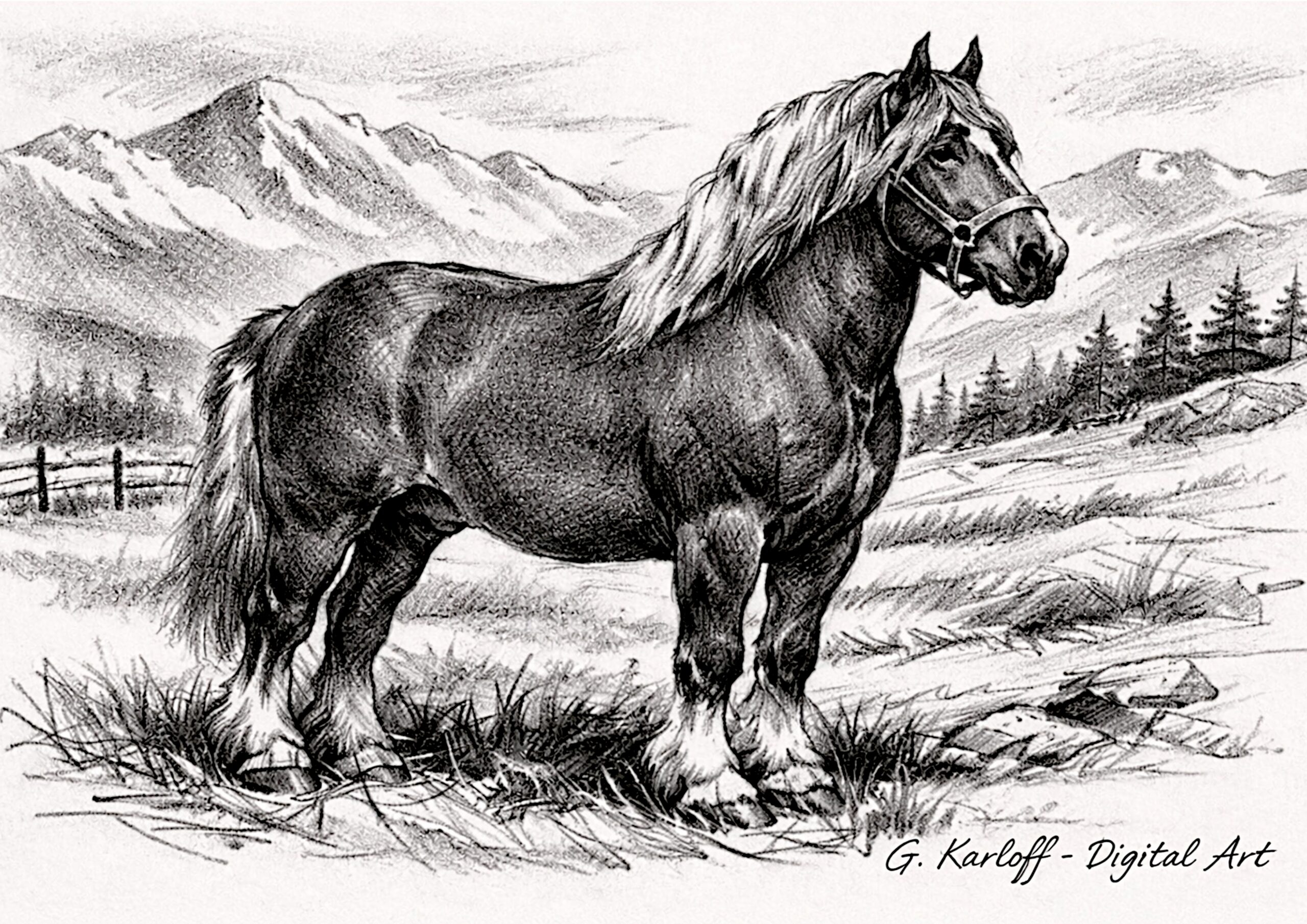
The Cavalli da tiro collection by G. Karloff represents a mature example of digital art, entirely hand-executed on a graphic tablet and subsequently modified with AI, in a conscious dialogue between painterly gesture, technological processing, and inner vision.
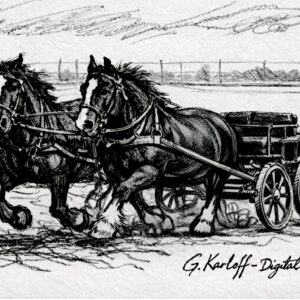
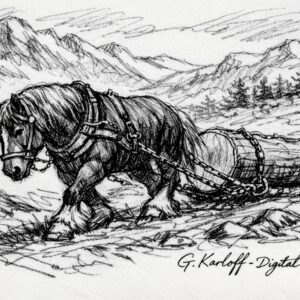
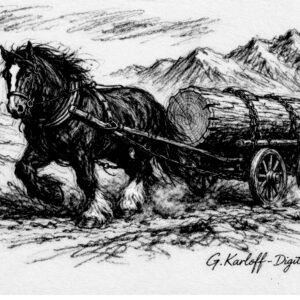
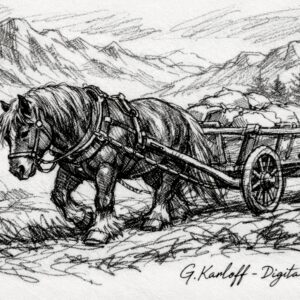
Composed of six panels, the series unfolds as a visual narrative dedicated to the silent strength and dignity of working animals. The horses, absolute protagonists, are depicted in different moments of their activity: pulling heavily loaded carts, moving through mountainous landscapes, or pausing in suspended stillness within nature.
The graphic language recalls traditional pencil and ink drawing, with a strong emphasis on line work and volumetric construction. The strokes are lively and layered, capable of conveying the weight of the bodies, muscular tension, and the effort of movement. The chiaroscuro, built through dense networks of marks, gives depth and solidity to the figures, evoking an almost tactile dimension.
Each panel presents a variation on the theme:
the grazing horse, the standing figure, those engaged in pulling carts or logs, and finally the composition featuring a pair of horses advancing together. This sequence is not merely descriptive, but builds an implicit narrative shaped by rhythm, labor, balance, and the relationship between human, animal, and landscape.
The natural environment — mountains, trees, paths — is not simply a background, but an integral part of the composition. It interacts with the figures, amplifying a sense of isolation, endurance, and continuity with an archaic dimension of labor.
From a technical perspective, the artist’s hand remains central: the line, despite its apparent simplicity, results from a careful and deliberate construction. The intervention of artificial intelligence acts as a transformative and refining element, without erasing the gestural quality of the drawing, but rather enhancing its rhythm, texture, and visual coherence.
With Cavalli da tiro, G. Karloff creates a collection that brings together observation, memory, and interpretation. The images do not merely depict rural life, but reinterpret it as a visual and symbolic experience, in which the strength of the animals becomes a metaphor for resilience, continuity, and rootedness.
The series thus presents itself as a cohesive and powerful body of work, capable of combining figurative tradition with digital experimentation, giving renewed contemporary vitality to the drawn mark.